Planets collide at the whim Of even the lesser gods
The working class gods The young and obnoxious gods Stalking about in their cheap suits Fondling soft pack cigarettes Preening and boasting No better than Peacocks at a lawn party
And like all gods They have an appetite for destruction Petty and proud Resentful Jealous Frequently vicious They compete without end
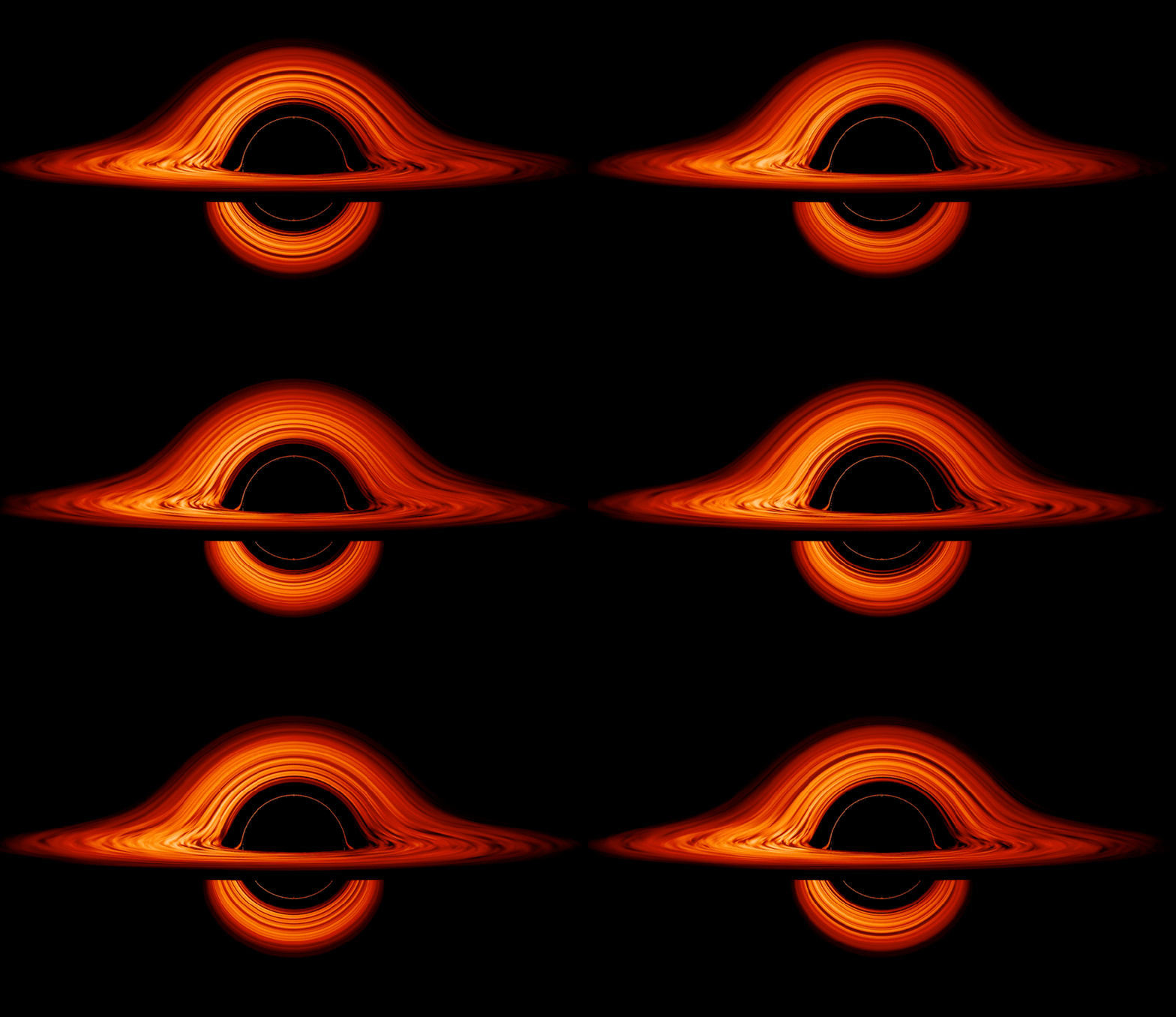
To kill an eternity of time They toy with this shabby astral plane With its puny suns Its dingy celestial bodies While out there on the dark far fringes The voracious black holes yawn
By skill Or by will By cheat Or by chance
The gods angle for control As each planet In its fashion Spins its last and vanishes to the jeers and laughter of these dime store deities These two bit tyrants
Each orb, in its turn Falls under their jealous eye Each in its turn must meet Its singular catastrophe Its careless annihilation
Once again The gods slouch Towards a new Eden To reenact creation
Once again the last black planet Aligns with the last black hole
This is a street And this is a bus And this is a passenger And this is the driver And the doors open And the story ends The bus pulls away from the curb The black rubber tires press down The asphalt pushes back
This is not an account Of events As they actually happened
But it is a sense of things As they are As they were As you used to be
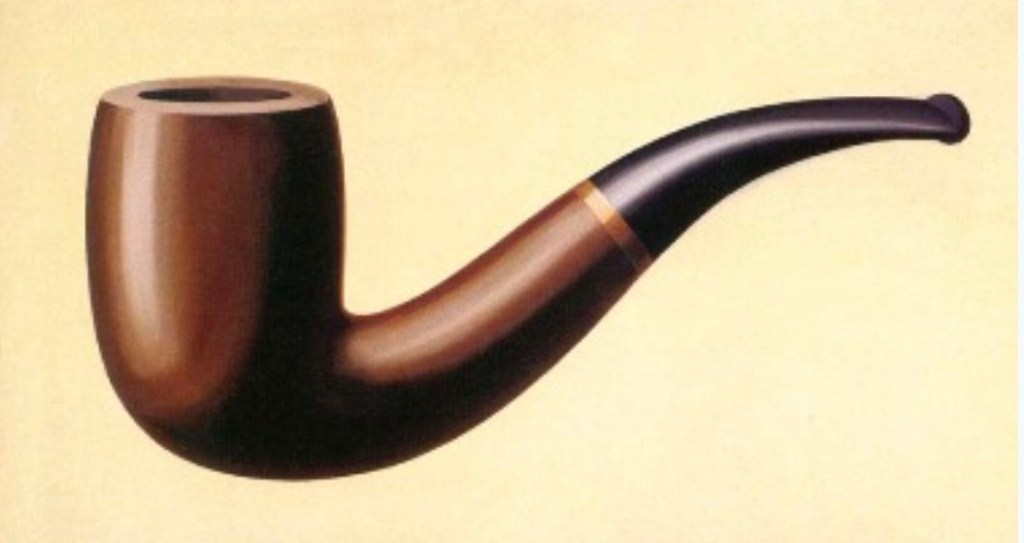
Every book has a title. A statement so obvious and yet so trifling, it shouldn’t even beget a rule.
Honestly, I hesitate even to mention it.
And yet, like a fly drawn to that which flies are drawn to, here we are. Good citizen scientists, smart as our pants and curious as a two headed kitten, checking to make sure that we are not led astray by false assumptions. Check fact against fact to discover the hidden fictions.
Armed with this simple, neutral approach and given the abundant ways in which we are able to test reality, one would think that we humans would be a little further along; a little more on the same page with one another. But all the evidence points to an unhappy conclusion; we prefer fiction. Fiction is, quite simply, more appealing.
Looking at the New York Times bestseller list for both Fiction and Nonfiction gives us a glimpse as to why this is the case.
Nonfiction: Why it’s Okay to be Angry at Capitalism Fiction: Hello Beautiful
Case Closed.
Just as the suit makes the man and therefore every man needs a suit, so the title makes the book and therefore every book needs a title. A dubious conclusion? Perhaps. A non sequitur? Quite possibly.
But so much of culture and civilization and the artifacts we worship have been built on false assertions; why stop now? Let’s see where it takes us.
One place it takes us is 1918 and George Jean Nathan’s A Book Without A Title. George’s book title is cloaked in clever denial but let us face this example squarely and admit that no one should be fooled by it except the fools. Fools are so clever that way.
Even so, let us reckon with it. Let’s say that you do not read English. If you do not read English and saw A Book Without A Title stamped on the spine of a book, you would know by the evidence of all that we know about books that this, this embossed gold inscription, is the title.
Your attorney or member of the clergy may want to argue that point, particularly if they are on the clock, but it would require a qualifier of some sort and qualifiers kill. It is qualifiers that flood an argument with doubt: tantamount to stating that an angel can write the lords prayer on the head of a pin but that, you know, the actual size of the pin may come into play. Are we talking a #32 beast of an upholstery pin then okay, maybe. A #8 sequin pin? Mmmmm, nah, probably not. A #000 insect pin? Fuhgeddaboudit !!!
Those who are practiced in the art of denial may want to characterize these types of example as the exception that proves the rule but it is exactly the opposite. Rules that have exceptions aren’t rules at all. They are simply the evidence of the sick compulsion to dictate; a pretext to stamp life into submission. By definition it is the exception that disproves the rule. That’s just a fact; unlike angels.
And so to my point.
As with books, every story has a title and as far as we know, every title will become clear somewhere along the narrative line if it is not already made obvious in the title itself as for instance: How to Win Friends and Influence People or My Fault: An Autobiography.
Not so with this story. It is the exception. Today’s title comes from a book that a woman sitting across from me on the subway is reading. The title of her book is not My Amnesia but at first glance that is what I thought it said.
I get a lot of ideas that way. From a misunderstanding of what it is I’m looking at. It’s one of the advantages of failing eyesight; I can’t think of another just now but let’s pocket that problem for another day.
I have often found when writing and not near any instrument of writing, that I will come upon a catchy turn of phrase that immediately starts slipping from my mind. It is overridden and overwritten not only by other things demanding of my attention but from the very attempt to remember. I am overcome by the anxiety of forgetting.
No matter how much I may like a phrase or how pleasantly surprised I may be by my own cleverness, if I don’t get it down immediately the words start trading places and then, as quickly as it coalesced, it is gone.
And I mean irretrievably gone.
Words like irretrievable can be got through the thesaurus but a turn of phrase is got while hot or not at all. Sometimes I can feel the words slipping away even while I’m repeating them to myself in an effort to remember them. Clearly there is something wrong with my method of memorization and by extension my memory itself.
My oldest friends, pals of an adventurous and travelled youth, call it “Long term loss of short term memory.” To my mind, a statement like that pegs my old comrades as present and former stoners but that doesn’t make them bad people, just forgetful people: absentminded but otherwise harmless.
And it is the absentmindedness that I’d like to touch upon; the small amnesias.
Have you ever had a good idea just as you were dozing off? Or awoke in the middle of the night with something you thought was unusually good or smart or even an answer to a nagging problem?
Of course you have: it’s universal. I’m going to state, unequivocally and without providing a shred of evidence beyond my own personal experience (a nonrandom survey sample of one) that not only is it a functional aspect of sleep, it is also a functional aspect of memory.
We all get those feelings and everyone knows there is no remembering those things in the morning. The brain is in no condition to set memories while it is tampering with sleep. If you don’t jot yourself a note right then and there, come morning it is only the impression that there was a good idea that remains; a folder on the desktop of your mind titled Urgent: Remember This but when you open it; nothing. The file is empty. At best there may be some tiny scraps; tantalizing bits and pieces of corrupted code set to a sleepy time syntax. Whatever is left is useless and will be entirely gone by the time your coffee break rolls around. There will be no second coming. Your stab at the great American novel or the melody of your smash hit song or a splendid little haiku or even the answer to yesterday’s Wordle that you botched; gone. But whatever it was, one thing is for certain, it was fantastic; absolute genius!!
Memories and ideas share that in common. Some will stay, especially those punctuated by laughter or crying, but the great mass will come and go. They are not like the light of distant galaxies going on forever in a kind of finite immortality; every moment from birth to death available somewhere along the thread of lightyears.
For us mortals, the events, the circumstances, the location and disposition of the observer are bound by the imperfect thread of memory. The facts are ever so elusive, even overrated one might argue, limited as they are by uncommon sense.
Then again, perhaps that analogy is wrong. It seems more likely that memory is not a thread; not a linear process at all but more of a net. Ideas are so multifaceted and interconnected with referents that the way is easily lost in the mesh of exponential attachments.
So much is lost of the fine grained particles of memory across the divide separating events and recollections. The large aggregates, the stones of unusual size or unlikely color; those we retain always. They linger, observable well into dementia. But when we dwell on those stones and set them firmly into the edifice of our own story, the sands and gravels of detail sift away.
And how would it be otherwise? Life is so rich; it is a solid mass. If we retained every detail it would be the present every time we remembered anything. Memory would occur in real time. That would bring relativity into the picture and goodness knows nobody wants that!!
In the not so distant past this kind of talk would have earned me a coveted title like Philosopher or Autodidact or possibly even Village Idiot.
But not anymore.
Now there are researchers who study this kind of thing and they understand it to such a fine degree that it must be infuriating to them that a dilettante like myself even hazards to conjecture on the subject. Or maybe they are encouraged by my curiosity; I don’t know, I’ll have to ask them. But if they were a little hot under the collar I certainly wouldn’t blame them. It must be maddening. They did the hard work; they did the double-blind studies, the brain scans, measurements, interviews; the whole gamut. They actually have the answers!!!
And if not all the answers, they most certainly have figured out the big questions. Once you have the questions figured out you’re more than half way home. It must be a very exciting time in the field. But that’s not going to stop uninformed pontificating. It never does.
What can one say? It is the age we live in. Intelligence and expertise have never been held in such low regard.
I ask you, are any of the top 10 social media pages on any platform devoted to the latest developments in cognitive research?
10,000?
10,000,000?
You don’t even need to look that up; you already know the answer is 0.
“Res Ipsa Loquitur” as your attorney would doubtless put it before handing you an invoice.
That said, I wouldn’t mind being deified for my unremarkable curiosity to say nothing of my well intentioned, if not well researched, conjectures. It’s not like I’m a slimy reactionary demagogue. They get all the huzzahs and hallelujahs. I’m just a curious person asking questions, trying to make sense of an apparently senseless universe using what creativity I may posses with the occasional trip down the rabbit-hole of “doing my own research”. As if I, or anyone else, can compress expertise into 30 minutes of scrolling with a predatory algorithm roosting on my shoulder.
For the record, “Doing my own research” should always be viewed as a red-flag, same as a suppurating wound; nothing good comes from either one though you shouldn’t doubt the reliability of what the wound is putting out.
So I’ve done my work along with a cursory amount of brooding upon the subject and I’d like to report my findings to add to the sum total of human knowledge. What I have to show you, my esteemed colleagues is:
Nothing of substance. Really, nothing at all.
Little different from the experts if you don’t count the substance part. However from the metric of social media popularity we are coequals.
Still, I don’t owe anything on student loans. Stupid wins again. And in so doing raises the question of why stupid keeps winning? Not just here but all around the world. Why is that? What words attach themselves?
Faith is the word we use for belief without evidence. We need a word for – Refusal to believe in spite of overwhelming evidence. You see, here’s an example of having asked the right question because the answer fairly presents itself. Faith works equally well for the second instance as for the first.
And so to sum up; from a robust body of sub-scholarly daydreaming I am ready to state with confidence the following conjectures which I shall henceforth refer to as facts.
(1) There are no reliable narrators and it is through no fault of their own. (2) That said, there are an astonishing number of outright liars; simply extravagant; and it is entirely their fault.
From these newly minted facts we can draw fundamental conclusions regarding the selectivity of forgetfulness; the small amnesias.
A person’s fundamental nature will inform how they will remember, what they will remember and what conclusions they will draw in order to confirm core beliefs and therefore which character from Winnie the Pooh will be their stuffed spirit animal.
It always comes back to the fundamentals doesn’t it?
Channelling Pooh Bear’s easy optimism, despite any bothersome setbacks, there are those who see the glass as half full. They can’t help themselves; their memories are sticky with the residue of best outcomes.
Channeling Eeyore’s exhausting pessimism, despite the routine delight of unavoidable successes, there are those who see the glass as half empty. They too cannot help themselves; their memories have defaulted to worst-case scenarios.
As for me? For my amnesia? I don’t know what they’re talking about because Tigger and I aren’t looking at the glass, we’re looking at Roo who is looking at the bottle, reading the label and……..
10 floors down A girl crossing the square Calls out a cheerful tipsy “G’night !!!”
In the dry fountain A bronze water nymph Bares a single small breast through her careless gown Unselfconscious
Insulated in shadow A homeless man has encamped around a park bench His chest, a metronome of coughing As though his spark is missing on one cylinder
From black trees and lampposts Holiday lights hang Celebrating to no one
10 floors up In a gracious pre-war A pensioner stands looking down
The paned window yawns wide Exhaling heat into cold
The air settles heavy On New Year’s night
Distant sirens chirp and howl without harmony
An ersatz constellation of scattered city lights Reflects deep in the black glass of an office tower Giving the illusion of depth
10 stories down
To the pavement
Gutters drink Open throated The dirty water of A dirty quarter
Brick pipe storm drains connect the streets to the river Water joins water Sliding under derelict barges, tethered to buoys, Turning clockwise on the heaving pulse of ebb and flood
A bus approaches slow Empty but for the driver Pushing hollow air before it Splashes erupting through the rippling mirror light of puddles
Puddles filling potholes Potholes like lunar craters The moon so bright and sterile A crummy satellite covered in potholes Stealing light
The bus makes its turn and recedes The soft sound of its gas motor joins with the sound of accelerating rain
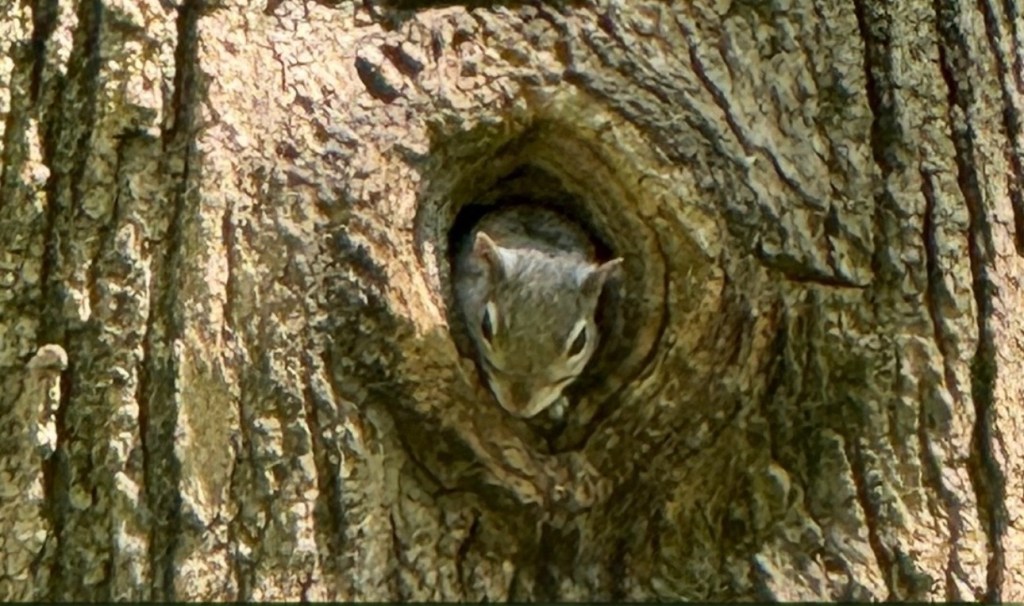
Back in the park Squirrels sleep While rats forage for missed peanuts Left out by tourists and children
The last of the taxicabs idles in front of the old Paradigm Hotel Waiting out the quiet
It’s almost as old as I am, the two of us having settled comfortably into our vintage years.
It’s from a happier time for wall clocks; a time when no time was told without a wall clock.
Every kitchen everywhere had one and our kitchen, like every other kitchen, was Mission Control. The clock was a prime mover; a second mother, both watcher and watched. Each second, the pointing hand tripped its advance; every jolting tick, another stroke of the scythe counting down the seconds to the day’s launch . . . 10 – 9 – 8 . . . . . . 3 – 2 – 1 . .
“Go to School”
There is a fractional pause when checking time; a pause between recognition and comprehension, between where the hands are and what they represent.
The face must be read, as with any encounter, be it lover or stranger.
And though it may be an easy read, honed through great familiarity, still it wants the moment.
It is, in its way, a mild flirtation; the clock’s face coyly withholding.
There’s a certain intimacy to it all isn’t there.
Face to face, mutually attentive to the here and the now. We grasp time as the clock gathers purpose.
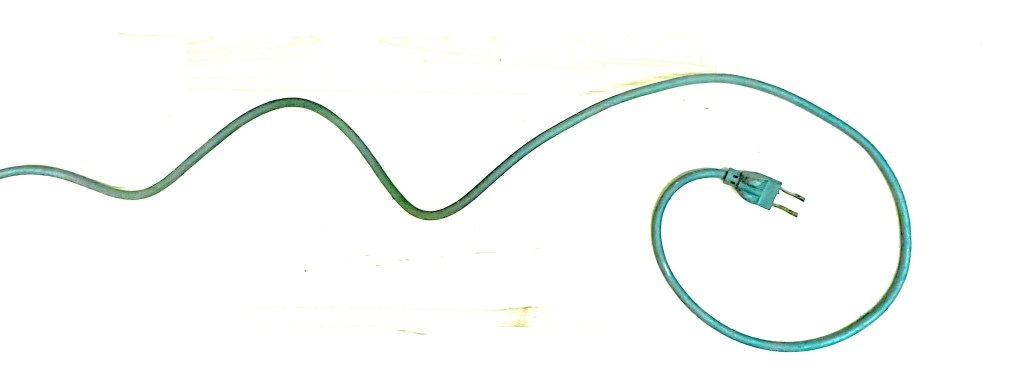
This clock, my clock, looks like a bright plastic daisy; white petals surrounding a sunny yellow bloom, an electric cord acting as an impossibly long, impossibly fragile stem.
It does a pretty good job of telling time though I barely use it for that purpose anymore. And yet I still throw it the occasional look; there is an enduring attraction.
At one point I thought my clock had run its course; an uncomfortable hum having developed somewhere deep in its acrylic blossom, as if to complain of its labors; perpetually crossing the finish line of an uncontested race.
But a drop of oil quieted its complaint; a drop of oil and a little light surgery.
A toothpick to clear some dust and gunk from the gears and it’s as good as it’s going to get.
The fact is . . . It was never perfect. It was always a little slow; losing time as it accumulated the hours.
For a while, an imperfect mental note made up for the imperfect timekeeping. But finally, as we approach separate time zones, I feel the need to act. I can no longer tolerate the distance between us.
Behind its back, I gently roll the stem between my fingers, setting things right for the time being.
For the time being, we are once again in unison; 1:1
I could pull the plug; put it to sleep; relieve it of its labors and its painful redundancy. But that seems unnecessarily cruel; to rob it of its raison d’etre.
It also seems manifestly unnecessary. Time alone will accomplish the deed.
I suspect its wearing out has more to do with the accumulated corrections than with the actual keeping of time but either way this clock has never been a stickler for accuracy.
A Flower Power relic of the free spirited ’60s perhaps this clock does not overvalue conformity. Maybe it likes being a clock but doesn’t love it. Or maybe, like time itself, it is simply indifferent.
There is something in its cheerful looks and laissez-faire attitude toward timekeeping that I find appealing.
Which may explain why I keep this plug-in electric daisy; not because its function binds me to the present, but because its charm ties me to the past.
Its delightful face, so familiar and so dear to me. For us, keeping time has lost purpose.
It has been a slow reversal of form and function spanning decades; seconds became hours, years become days.
Someday, when all the ticking stops, what will remain?
This face, perhaps in the background of a photograph of a cat or a dog or a parent
Okay so I’m in Center City Philadelphia walking south on S.18th street. I’ve only just moved here after 35 years in NYC. It is very hot, very humid and very bright under the August sun.
I’d gone to lunch, arm in arm, with my 87 year old, 92 pound, intensely forgetful mother. We always travel arm in arm; partly for her stability but also because it’s kind of our thing.
My father’s very long glide path to his finale had prioritized his care and, at least from my own perspective, we are making up for time lost to our own relationship and her developing needs.
After lunch I’d taken her to the tailor to have a fitting for pants that she’s having made and then returned her safely to her apartment for her afternoon rest.
Now I’m heading back to The Studio, formerly my father’s photography business and now my new residence.
Ordinarily I would turn east on Spruce Street because that is the shortest distance to The Studio but there is less shade and more mental illness on Spruce. I don’t know that there’s a connection there but I don’t know that there isn’t either.
I decide to go the extra block south to Pine Street; it’s quieter, it’s prettier, there is far less commercial activity and the older trees provide better shade.
I make the turn onto Pine and as I’m walking along at the casual pace suggested by the heat, a tall lean 20 something black guy on roller blades passes me on the sidewalk going in the opposite direction and moving at a pretty good clip. He’s smiling and sweating and deep into whatever groove he’s cultivating. He appears to be delivering a small pizza.
The sidewalk is rough, unevenly laid brick, typical of residential streets in this colonial era city, but he is graceful and navigates it beautifully. His hair is multicolored but predominantly a bright acid yellow. He is topless with mid-length NBA basketball shorts, probably the Sixers but I’m sidestepping him so I miss that detail.
The sidewalk is narrow and his left skate is in danger of hitting the brick edge on a slightly raised tree pit. I cringe in anticipation of a fall but it effects him not at all. The wheel kisses the brick lightly as it rolls up and over and then he is gone.
I continue down Pine doing what a lot of other Philadelphians seem to be doing these days; scanning tree, ground and stoop looking for Spotted lanternflies, a recently arrived invasive and destructive species. Killing them is an activity that all Philadelphians appear to be united around.
Crushing a Spotted lanternfly is rarely successful on the first attempt. They are very fast but their flight path is equally short and they seem to tire easily. A few tries usually accomplishes the deed. The pursuit itself involves stamping and chasing and more stamping and no small amount of laughing and in that way the whole thing shares a lot in common with The Hokey Pokey. And in truth, it also represents one of life’s rare occasions in which to take unbound pleasure in slaughtering one of god’s creatures. Little wonder it’s such a popular diversion.
I walk and look, my predatory search for invasive species giving way to my A.D.D. and thence to the incremental details of life’s great pageant; taking note of a newly dead infant squirrel and the collection of masculine souvenirs littering an interesting barbershop window along with…….
What is this ?!?
It cannot be !!!
Under an old Sycamore, obscured by the deep shade and splayed out like a dead bird against the dark red fractured brick sidewalk is a bulging ziplock sandwich bag.
I lean over to look more closely and see that it is a bag of buds. I don’t need to smell it to know that it is strong but I do anyway.
It is very strong.
I look around. There is little foot traffic but there is some. I consider the options; leave it in hopes that it’s owner comes looking before someone else grabs it; take it into protective custody; possibly pass it along to a friend and I’m not sure what else but surely something.
In my mind I do the numbers and I’m now rewriting my understanding of the skater and I’m 75% sure he’s delivering more than pizza. Maybe 80%.
I don’t smoke so this bag has no value to me but it does have value to somebody. Somebody is going to miss it. The dramatic possibilities compound around worst case scenarios. Finally I decide to pocket the bag because there is drama surrounding it and I want to see what happens.
I look back up Pine Street in the direction the skater was heading. I wait for a few minutes to see if he returns but he does not. Either my instincts are wrong or he hasn’t figured it out yet. I’m holding out for door #2. I continue on my way home, turning occasionally to check and scoring a single kill of a Spotted lanternfly.
I come to Broad Street. It is a wide boulevard and a natural dividing line. If nothing happens now it feels like the story will end right here.
The light is against me so I turn around one last time and there he is, a long block behind. He’s skating more slowly and my estimation of the situation goes up to 100%.
He’s about a half block away when I point directly at him. As soon as he makes eye contact with me I wave him over. He’s still about 30’ away when I smile broadly and say:
“you lose something ?”
His face and body instantly reflect this sudden change to good fortune.
“yeah and I need it back.”
He does a sort of pirouette around me as I reach into my pocket and seamlessly make the handoff and he’s away without ever having stopped.
Between the expanding distance and the noise of traffic I barely hear him as he calls back:
I’m catching a few snippets of conversation between a man and a woman sitting almost directly across from me. My guess is that they’re in their late twenties or early thirties. They are unusually attractive and well dressed for this time of morning. Between 4:30 and 6:00 AM is ordinarily reserved for the blue collar crowd of which I am a part. These two provide a pleasant diversion.
I have a good frontal view of him and a delicately beautiful profile of her. He looks confident and tolerably masculine; she is a wonderfully restrained and equally confident feminine. They look to be young professionals just hitting their stride.They are each dressed to a neat corporate stereotype and cloaked in camel fur coats. I don’t know how the camels feels about it but these two look marvelous.
They are not romantically involved. Sherlock that I am, I know this because they are sharing a 3 seat bench but the middle seat between them is empty; the unspoken distance. That said, they do appear to know each other. They both have beautifully clear, honey colored skin, thick shiny dark hair, slightly almond eyes; he with full beard and both with expressive hands. I’m thinking Queens by way of Central Asia.
I catch the word “pizza”. It’s like magic. All at once, I’m all in. If I hadn’t been listening before, they’ve got my full attention now.
~)(~
I can’t think of a time when I haven’t been happy to hear that word. Not simply because pizza is a gift and proof of a fundamentally jolly universe but also because of the near endless associations.
After club hours at Mama Angelina’s Pizza in Philadelphia on Locust Street close to the NE corner of Broad Street. I haven’t been there in more than 30 years and I won’t be going back; it’s long gone, replaced by who cares what.
_
After violent, high decibel shows at The Ritz (formerly and subsequently Webster Hall) in New York City. 75 cent slices up and down 2nd Avenue to feed the hunger and calm the nerves.
_
A dozen pizzas delivered to a construction site where I was working at the southern tip of Manhattan. Not every good intention results in a successful conclusion and in this case the pies arrived only after the gang had all gone home for the night. All but myself and one other guy. An obsessive compulsive mental defective, he ate 3 full pies. I had 2 slices and just watched the carnage. He was taking a breather before the next onslaught, gulping air and swigging Diet Pepsi when I left him.
~)(~
Back on the subway, I’m building a story about these two good looking individuals. They are roughly the same age and with their apparent familiarity I would even hazard that they are related except for his next comment:
“When I was young…“
Uh oh. I don’t like the sound of this. We might have had the beginnings of a courtship; a budding romance. I like romance. These two early morning commuters, quite possibly from a neighborhood with a distinct cultural community may recognize in one another their common bonds and common interest. Their common commute has afforded a daily 30 minute window of relative privacy and intimacy as they thoughtlessly barrel headlong through tunnels to who knows what final destination. There’s a little magic in the air but he’s gonna blow it with a comment like:
“When I was young…“
He’s leading with a complaint and all but declaring that sooner or later he’s going to prove himself to be a stick in the mud. Given his relative youthfulness my money is on sooner.
In my mind I’m whispering to him to shut up and ask her about herself. He’s so self assured that his clumsiness is troubling. I feel like it exposes a paternalistic streak. Not that it’s any of my business of course but honestly, he’s ruining the latest fiction that I was so carefully constructing around them. I had all but put the child in the empty seat between them and now this?
When I was young? Are you kidding me? You still are young sonny-boy so why don’t you just give it a rest. And you may have noticed that she’s got eyes!!! I can see them from here!!! Just gaze into them adoringly; maybe ask her about her hopes and dreams for the future. Let’s face facts young fella, it’s becoming obvious that you’re at your most eloquent when you’re not talking.
Obvious to me anyway. Who knows what she’s thinking. Women are a riddle, wrapped in a mystery and cloaked in lacy undergarments.
I think it’s fair to say that I dislike “When I was young…“ as a lead off to a story and not least because I know I’m guilty of using it. And not just me; everyone!! Inevitably these words are followed by a story whose details are sharply defined from the repetition of telling but whose colorful aspects are faded by their distant origins.
The story is going to be about how things used to be different; how things used to be better; how difficult it is to adapt to the changing landscape of the present; how slippery the future looks. What’s more; “When I was young…“inevitably gives a tidied up view of the past. Cigarettes, candy and gasoline were cheap and good for you!!!
Dont get me started.
It is a given that only people over 50 should be starting a sentence with “When I was young…“ A half century is a real nice kickoff point for developing a tiresome, crotchety old age. If you are under 50 and using “When I was young…“ as a conversation starter you need to get on antidepressants and focus more on your listening skills.
For those of us that are well over 50 the flip side of “When I was young…“is the obvious acknowledgment that we are not so young anymore. It’s not good being not young. This side of not young doesn’t look as good as it did when I was young and frankly it didn’t look that good to begin with. So I am secure in my person; so I am more or less in charge of my own destiny; big whoopee!
“When I was young…“ The horizon was a beckoning mystery. The girl in the tight top was a provocative mystery. Young, Loud and Snotty was a fully formed ideology.
“When I was young…” is the beginning of a story no one wants to hear but everyone wants to tell.
Don’t get me wrong, I’m not saying that things aren’t more difficult now. I’m not saying that the world isn’t more complicated; that it isn’t more fractured; that relationships aren’t fraught with greater risks or that the arrow of time isn’t heading in the direction of chaos.
What I am saying is that even though I am no longer young and even though I am no longer immortal and even though I am no longer the center, even of my own universe,with a bit of age and a bit of luck and a little reminder from a chance encounter one does recall that where you look for offense you will find offense and where you look for meaning you may not find satisfaction but in the end, you will gladly settle for pizza.






 Themes and Deviations